When most people think of bees, they picture the European honey bee. But Australia has a huge diversity of its own native bees, many of which go unnoticed. They range from tiny bees only a few millimetres long to large, buzzing carpenter bees. This guide explains what they are, how they live and how to help them.
This guide is general information written in our own words, based on the sources listed at the end. Rules about wildlife, pets and plants vary between states, territories and councils, so check locally. We don't recommend particular businesses or products.
How many native bees are there?
Estimates vary as research continues. The Australian Museum says there are more than 1,500 species of native bees in Australia, with around 200 in the Sydney region alone. The Western Australian Museum and Museums Victoria put the figure at around 2,000 species. Either way, Australia has a remarkable variety, and many species are still to be described.
Solitary bees
Most native bees are solitary. Each female builds her own nest, gathers pollen and nectar and lays eggs, without a hive or workers. Different species nest in different places:
- Ground-nesting bees dig burrows in bare soil.
- Reed and stem bees nest in hollow or pithy stems.
- Resin bees and leafcutter bees use existing holes in wood and seal them with resin or leaf pieces.
- Carpenter bees excavate tunnels in soft timber.
Stingless bees
Stingless bees are social and live in colonies, often in tree hollows. The Australian Museum notes they're the only native bees without a sting. WA Museum and Museums Victoria say 11 Australian species are stingless and make honey. Stingless bees are mainly found in warmer northern and eastern areas, and some people keep them in hives. If you're interested, research what suits your climate and buy from a reputable keeper.
Recognising native bees
Some well-known native bees include:
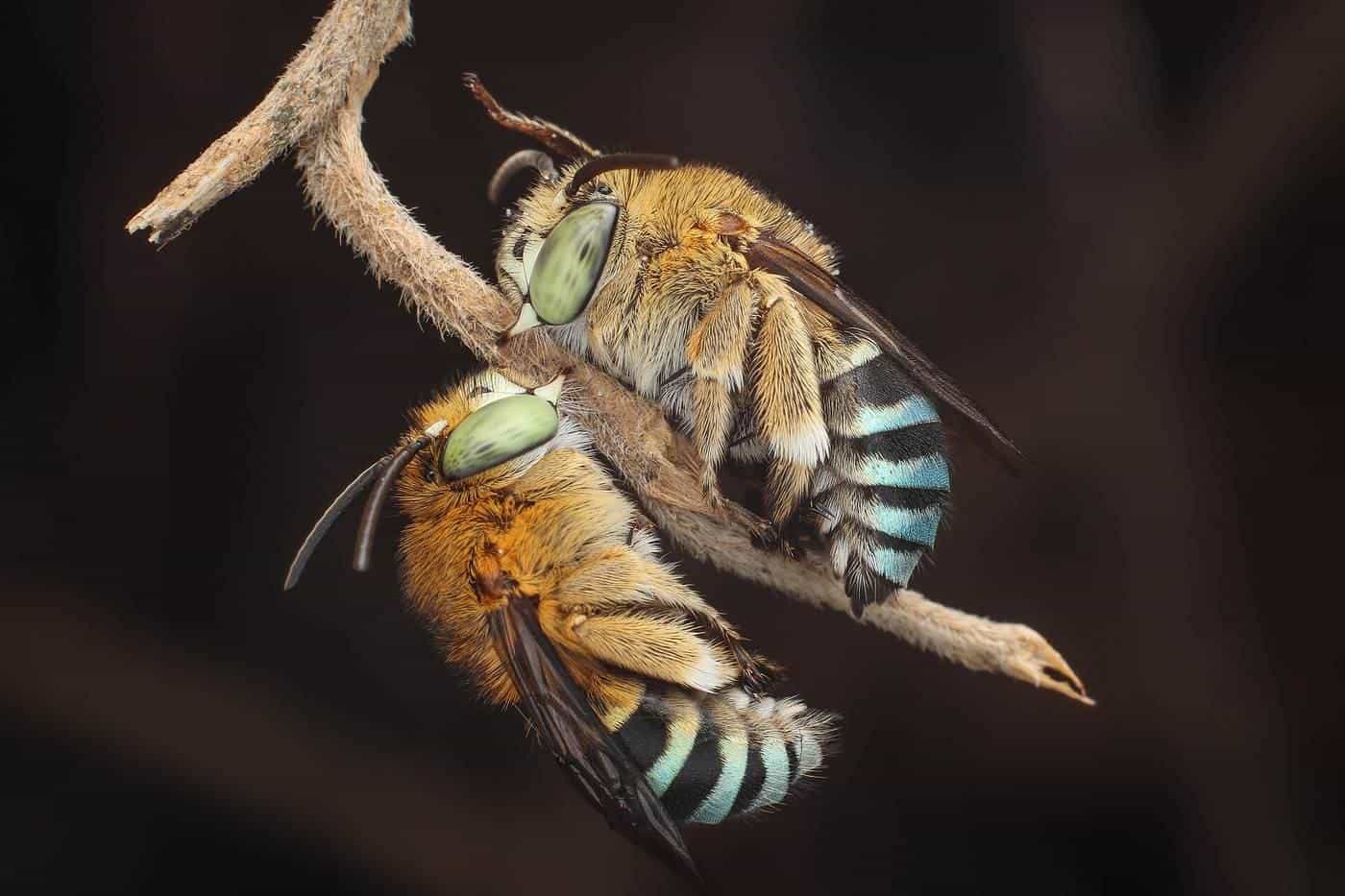
- Blue-banded bees: striking blue bands on the abdomen, often seen buzzing around flowers. They use "buzz pollination", vibrating flowers to shake out pollen.
- Teddy bear bees: furry, golden-brown bees.
- Leafcutter bees: cut neat circles from leaves for their nests.
- Masked bees: small, slender bees, often with yellow facial markings.
- Stingless bees: tiny black bees, seen in groups around hive entrances.
A clear photo uploaded to a citizen science platform can help with identification and adds to the record.
Why native bees matter
Native bees pollinate native plants, and some help pollinate crops. Some native plants depend on particular kinds of bees, such as those that buzz-pollinate. Supporting native bees helps keep plant communities healthy.
Plants for native bees
- Grow a variety of flowering plants that bloom across the year.
- Include local natives such as eucalypts, tea-trees, bottlebrushes, daisies, native peas, and plants with blue or purple flowers.
- Let herbs such as basil and lavender flower.
- Avoid heavily doubled flowers, which can hide pollen and nectar.
See our wildlife-friendly gardens guide for more.
Nesting sites
- Leave patches of bare, undisturbed soil for ground-nesting bees.
- Keep some dead stems and pithy branches of native shrubs standing.
- Put up a bee hotel in a sheltered, sunny spot.
Building a bee hotel
Good bee hotels use untreated hardwood blocks with holes of different diameters drilled cleanly (not all the way through), or bundles of bamboo or hollow stems. Smooth holes help protect bees' wings. Place it facing morning sun, sheltered from rain. Avoid using pinecones, loose straw or softwood that may rot or harbour pests.
Avoid pesticides
Insecticides can kill bees directly, and some can affect them through pollen and nectar. If you must spray, choose the least harmful option, avoid flowering plants and follow label directions.
Are native bees dangerous?
Most native bees aren't aggressive. Many can sting but rarely do unless handled. Stingless bees may bite or tangle in hair if disturbed, but have no sting. If you're allergic to insect stings, take normal precautions and get medical advice.
Recording native bees
Photographing bees and uploading them to iNaturalist or other platforms helps researchers understand where species live. See our citizen science guide.
Honey bees and native bees
European honey bees are important for agriculture and beekeeping, but they are introduced to Australia. In bushland, feral honey bee colonies can compete with native bees and birds for nectar and pollen, and occupy tree hollows that native animals need. Native bees and honey bees can coexist in gardens with plenty of flowers. If you find a swarm or feral colony, contact a local beekeeper or pest controller for advice.
Bees through the seasons
Native bees are most active in warm weather, with many species emerging in spring and summer. Some fly in cooler months, especially in warmer regions. Planting for flowers across the year supports bees whenever they're active. In winter, bee hotels may contain developing bees waiting for warmer weather, so leave them in place.
Watching bees
Spend a few minutes watching a flowering plant on a warm, sunny day. You may notice tiny bees on daisies, blue-banded bees buzzing at flowers and leafcutter bees carrying leaf pieces. A hand lens or close-up photo reveals remarkable detail. Watching bees is a gentle way to learn patience and observation.
Try the habitat checker
Our free habitat checker asks about eight simple features of your garden or balcony, such as local plants, water, dense shrubs, leaf litter and night lighting. It gives you a quick count and three practical next steps. It runs entirely in your browser, and nothing you tick is sent anywhere. It's a simple way to turn the ideas in this guide into action at home.
Where our information comes from
Factual statements in our guides are based on expert and official sources, including the Australia State of the Environment 2021 report and the Department of Climate Change, Energy, the Environment and Water; the Australian Museum, Western Australian Museum and Museums Victoria; wildlife rescue organisations such as WIRES; BirdLife Australia; and the Atlas of Living Australia. We link to each source at the end of the page and rewrite everything in our own words.
Local rules vary
Australia's states, territories and councils each have their own rules about native wildlife, pets, weeds, pest control and development. A practice that's fine in one area may need a permit, or be banned, in another. When a guide mentions rules, treat it as a prompt to check your own state environment agency and council website. If in doubt, ask them directly before acting.
Acknowledging Country
Australia's biodiversity has been cared for by Aboriginal and Torres Strait Islander peoples for tens of thousands of years. We acknowledge the Traditional Custodians of the lands and waters across Australia and pay our respects to Elders past and present. Many local councils and land councils share information about the Traditional Owners of your area, and some run programs connecting people with Country.
Learn with others
You don't have to learn alone. Field naturalist clubs, birding groups, Landcare and bushcare groups, frog societies and native plant societies run walks, talks and working bees across Australia. Libraries and museums often host free events. Joining a group is one of the fastest ways to learn identification skills and meet people who care about local wildlife.
Small spaces still count
Not everyone has a garden. Renters and apartment dwellers can still help with pots of flowering natives, a shallow water dish on a balcony, warmer outdoor lights and a contained cat. Community gardens, school grounds and local parks offer further chances to plant habitat and record wildlife. Every patch of habitat, however small, adds to the network.
Tell us what you think
We review our guides regularly against their sources. If you notice something out of date, have a question we haven't answered or spot an error, please let us know through our contact page. We read every message and correct mistakes promptly.
Key points
- Australia has more than 1,500 native bee species, possibly around 2,000.
- Most are solitary; only a few social stingless species make honey.
- Grow varied flowers and leave bare soil and stems for nesting.
- Avoid pesticides on flowering plants.
Frequently asked questions
How many native bee species are there?
The Australian Museum says there are over 1,500 species; WA Museum and Museums Victoria put it at around 2,000.
Do native bees sting?
Many can, but most are not aggressive. Stingless bees are the only native bees without a sting.
Do native bees make honey?
Most don't. Only a small number of species, the social stingless bees, store honey.
What is a bee hotel?
A block of timber with drilled holes, or bundles of hollow stems, that gives solitary bees places to nest.
Sources and further reading
Facts on this page were checked against these primary and official sources. Conditions change — confirm before you travel or buy.
- Bees: suborder Apocrita — Australian Museum
- Native bees — Western Australian Museum
- From A to Bee: Australian bees need our help — Museums Victoria